The Agentic HR Shift — Edition 4, June 2026
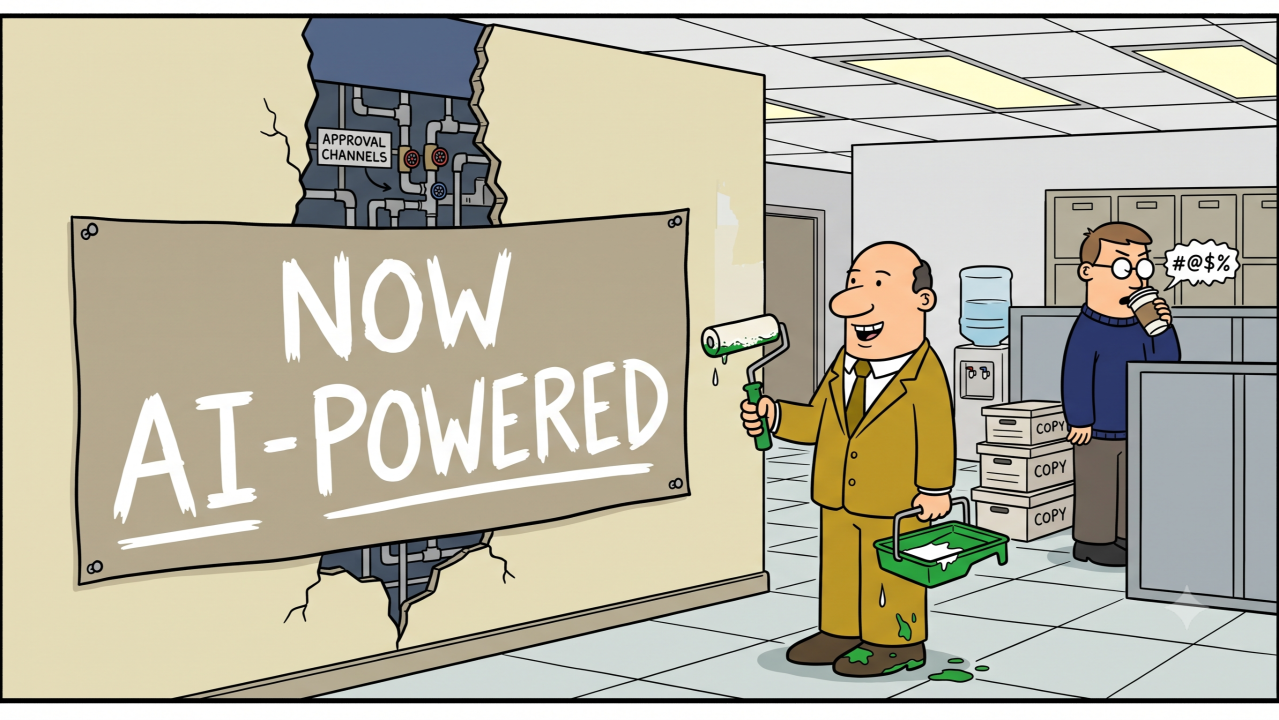
Every CHRO already made a choice. Most don't know they made it.
The Headline Insight
Two of the most credible research houses in HR just quantified something the industry had only gestured at for a year. The Josh Bersin Company's HR 2030 blueprint states that organizations which rebuild the HR operating model around agentic AI capture benefits ten to a hundred times larger than those that simply install agents inside the current one and count the headcount saved. Gartner, separately, found that adapting the operating model itself is the single biggest lever on AI productivity gains, ahead of training, communication, or adoption campaigns combined. Most HR functions are pulling every lever except that one.
The Argument
The Shift
For the better part of 2025, the HR conversation was about whether to adopt AI. That question closed months ago. The question sitting on every CHRO's desk now, whether they have named it or not, is which of two paths they are on.
Path one: install agents into the process you already have. Copilot for the HRBP, a chatbot for tier-one service, an AI screen before the human recruiter. Same approval chain, same job architecture, same reporting lines, now running faster.
Path two: use the arrival of capable agents as the reason to ask whether the process should exist in its current shape at all.
The Josh Bersin Company put real numbers behind the gap between the two when it launched its HR 2030 blueprint at the Irresistible conference on June 8. The research maps up to 130 specialized agents and 95 distinct HR-focused skills across the function, and projects that HR teams following the redesign path will run 30 to 50 percent smaller by 2030, with the share of strategic work rising from roughly 30 percent of the job today to as much as 75 percent. The detail that should stop every CHRO mid-scroll: the report estimates the value created by genuine redesign at ten to a hundred times what you get from using the same agents purely to cut headcount inside the old structure.
Gartner's own productivity research draws the same line from a different direction. Its Productivity Impact of AI Survey found that adapting the operating model to AI carries the highest predicted impact on productivity gains of any lever measured, at 29 percent, ahead of knowledge sharing and ahead of adoption or acceptance campaigns. One visible symptom of that shift is already showing up in ratios: some forecasts now put the HR business partner coverage model moving from roughly one HRBP per 423 employees today toward one per 800 to 1,200 as flexible, AI-supported pods replace the fixed HRBP structure.
Why It Matters for HR
Here is the uncomfortable part. Most organizations believe they are on path two because they bought the tools associated with it. Deloitte's 2026 Global Human Capital Trends survey, covering more than 9,000 leaders across 89 countries, found that only 6 percent report real progress on redesigning how humans and AI actually work together, even though work redesign is the factor most predictive of AI return on investment. Organizations that take a technology-first approach instead of a work-design-first one are 1.6 times more likely to miss their expected AI returns. Sixty-five percent say culture needs to change significantly because of AI. Eighty-five percent call workforce adaptability critical. Seven percent say they are actually leading on it.
Translate that into board language: the vast majority of HR functions can point to an AI deployment slide, but almost none can point to a redesigned decision, role, or workflow that AI made possible. That gap is not a rounding error. It is the difference between a function that modernized its tools and a function that modernized its model, and only one of those shows up on the P&L.
The People Analytics Angle
This is the argument People Analytics should be making before anyone else in the building does, because it is the one function built to turn "we should redesign the operating model" into a number a CFO will sign off on.
The PeopleMatters framing of the CHRO as enterprise architect gets at exactly this. It is not about owning another AI tool. It is about owning the skills architecture, the decision-governance model, and the honest audit of which of HR's roughly 250 specialized roles and workflows still need to exist in their current form once agents can do the tier-zero and tier-one work. That audit, and the business case that follows it, is a People Analytics deliverable, not a change-management slide deck. It requires the same discipline Luc has argued for since day one: connect the workforce data to a decision the business actually has to make, not to a metric HR already tracks for itself.
Concretely, this means three things sit squarely in the People Analytics lane this year: building the zero-based process audit that tells leadership which roles, approvals, and decisions survive redesign; translating Bersin's ten-to-a-hundred-times figure into a business case denominated in the metrics finance already trusts, cost per decision and cost per outcome rather than agents deployed; and defining, alongside legal and the CHRO, which decisions can be delegated to an agent and which must keep a human name attached to them. Do all three and People Analytics becomes the function running the restructuring conversation. Skip them and it becomes the function reporting on how many licenses got activated.
The Contrarian Take
Here is where most of the industry commentary gets it backwards. The consensus view is that automating the old model, even imperfectly, is better than doing nothing, a useful stepping stone on the way to real transformation. It is not. It is worse than doing nothing.
Automating without restructuring spends the transformation budget on the wrong thing, then tells the board the job is done. It exhausts the organization's appetite for disruption on a rollout that changed nothing structural. And it hands leadership a genuinely persuasive story, an AI-powered dashboard, a chatbot resolution rate, a shiny agent count, that makes the case for real restructuring harder to make a year later, because the obvious question becomes "didn't we already do this?"
One widely circulated analysis this spring framed the choice as three tiers: helping employees use AI inside existing work, redesigning which tasks AI or humans own, and the more radical step of zero-based design, asking what the function would look like if it were built from scratch today. That same piece put the share of CHROs who have genuinely reached tier two or three, meaning they have actually rebuilt some piece of the operating model rather than just enabled AI use within it, at around five percent. Its other headline figures track with Bersin and Gartner: organizations that redesign are roughly twice as likely to exceed their revenue goals, and those with mature AI readiness report about 26 percent higher business impact than those still experimenting.
Read those together and the picture is not "early days, room to improve." It is a small minority doing the hard, structural work and a large majority mistaking activity for progress, then locking that mistake in with a fresh coat of paint that makes it look intentional.
What This Means in Practice
If you are a CHRO, before approving the next AI tool purchase, force a written answer to one question: does this agent operate inside today's process, or does it remove a step, an approval, or a role entirely? If the honest answer is "inside," budget it as a cost-efficiency line, not a transformation line, and say so out loud in the room where the budget gets approved.
If you lead People Analytics, this is the quarter to run the zero-based audit on your highest-volume, most-instrumented process, most likely recruiting or tier-one service, and present the findings in cost-per-decision terms rather than adoption terms. That framing is what gets a CFO to treat operating-model redesign as a capital decision instead of an IT line item.
If you run an HR team more broadly, retire "number of agents live" and "licenses activated" as success metrics this year. Replace them with process steps removed and decisions now made without a human in the loop, then ask honestly whether removing that human step actually improved the outcome or just moved the bottleneck somewhere less visible.
One Thing to Watch
The Josh Bersin Company has committed to publishing detailed architectures, vendor benchmarks, and operating-model case studies from its HR 2030 corporate membership over the coming months. That will be the first dataset large enough to separate organizations that genuinely restructured from those that automated the old model and called it transformation. Worth tracking closely before your 2027 budget cycle locks in the wrong category of spend.
The Closing Provocation
Ask your own HR leadership team one question this week: if you deleted every current HR process and rebuilt it today with the agents already available, how much of what you have would survive unchanged? If the honest answer is most of it, you have not adopted AI. You have repainted a process you were too afraid to remove.
📚 Sources & References
- The Josh Bersin Company: "HR 2030: The Agentic HR Blueprint," launched June 8, 2026 at Irresistible 2026
- Gartner: "The Future of AI in HR: Reinventing the Operating Model," gartner.com
- Deloitte: "2026 Global Human Capital Trends: From Tensions to Tipping Points" (9,000+ leaders, 89 countries)
- PeopleMatters: "The CHRO as Enterprise Architect: Designing the AI-Ready Organisation," April 2026
- Sajithkumar Swaminathan (Medium): "By 2030, Half of HR Will Be Run by AI Agents. CHROs Who Aren't Rebuilding Now Are Already Behind," May 2026
Originally published in The Agentic HR Shift on LinkedIn.